
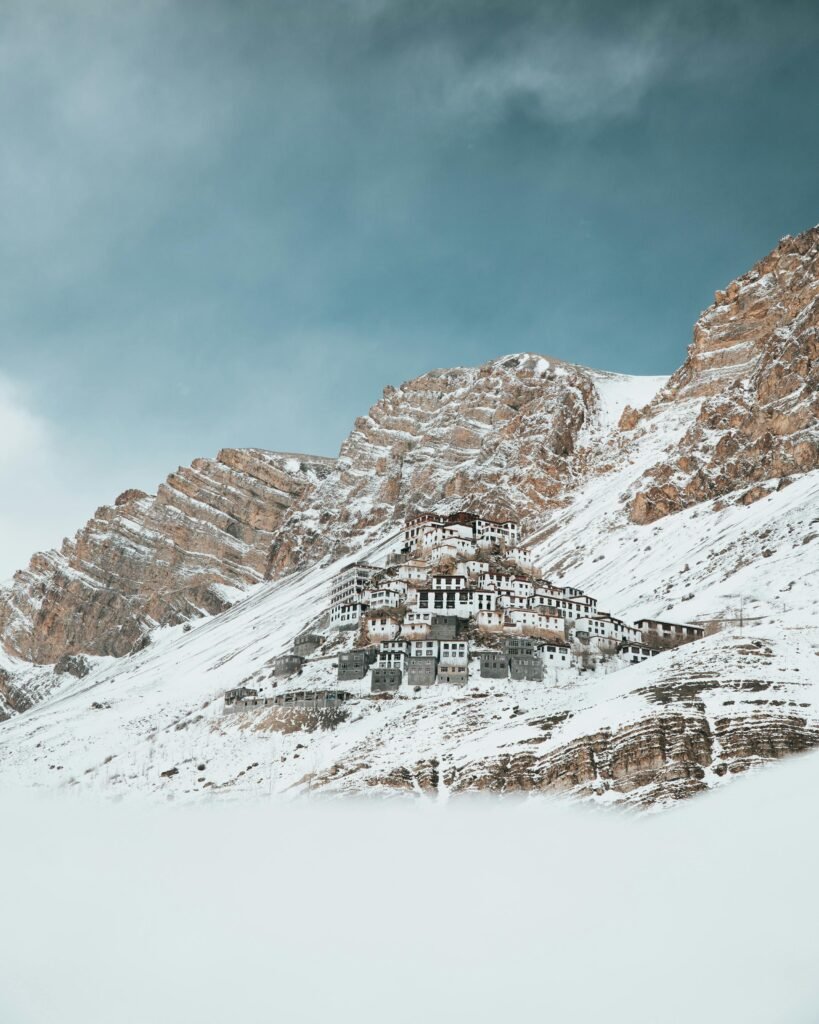
Winter in Spiti Valley is a completely different experience from summer. Snow-covered mountains, frozen streams, traditional mud houses, ancient Buddhist monasteries, and peaceful Himalayan villages create a magical landscape for travellers who love nature and adventure.
Located in the high-altitude cold desert of Himachal Pradesh, Spiti Valley is famous for its dramatic mountains, unique culture, and beautiful remote villages. During winter, temperatures can fall to around -20°C or lower in some locations, making proper preparation essential.
If you are planning a winter holiday in Himachal Pradesh, a Spiti Valley winter road trip can be an unforgettable experience. With Voyage de Himalaya Tour and Taxi Service, you can plan a customised Himalayan journey with private taxi arrangements, accommodation options, and travel assistance.
Whether you want to photograph snow-covered landscapes, explore ancient monasteries, experience local village life, or enjoy the peaceful beauty of the mountains, winter Spiti offers something truly special.
Why Visit Spiti Valley in Winter?
Spiti Valley attracts travellers throughout the year, but winter offers a unique atmosphere that is very different from the busy summer season.
1. Beautiful Snow-Covered Mountains
Winter transforms the rugged mountains around Spiti into spectacular snowy landscapes. The contrast between white snow, brown mountain cliffs, traditional villages, and the blue Himalayan sky creates wonderful photography opportunities.
2. Peaceful Himalayan Villages
Villages around Kaza, Kibber, and other parts of Spiti offer an opportunity to experience the traditional lifestyle of the region. Winter travel can be quieter than peak summer, although accommodation and services may be limited.
3. Ancient Buddhist Monasteries
Spiti is known for its centuries-old Buddhist heritage. Monasteries such as Key Monastery, Tabo Monastery, and Dhankar Monastery reflect the region’s rich spiritual and cultural traditions.
4. A Unique Cold-Desert Landscape
Unlike the densely forested hills of many other Himalayan destinations, Spiti has a dramatic cold-desert landscape. Its wide valleys, rocky mountains, frozen streams, and open skies create a unique winter travel experience.
5. An Adventure for Road-Trip Lovers
Winter Spiti is attractive to experienced travellers who enjoy remote destinations and mountain photography. However, snow, ice, road closures, and extreme cold make this journey more demanding than a normal hill-station holiday.
Best Time to Visit Spiti Valley in Winter
The winter season generally extends from November to March, with the coldest conditions commonly experienced during December, January, and February.
November: Temperatures begin to fall, and higher areas may receive snowfall. Some roads and services may already be affected by winter conditions.
December: Snowfall and freezing temperatures can transform the landscape. Travellers should prepare for severe cold and possible travel disruptions.
January: This is one of the coldest periods. The journey requires careful planning, warm accommodation, and reliable information about road accessibility.
February: Winter conditions continue, with snow-covered scenery and very cold nights. Weather and road conditions remain unpredictable.
March: Conditions may gradually begin changing, but snow and closures can continue in high-altitude areas.
According to the official Himachal Tourism website, temperatures in Spiti can fall to approximately -20°C during deep winter. Always check current forecasts and local road conditions before travelling.
Best Places to Visit in Winter Spiti Valley
1. Kaza – The Main Town of Spiti
Kaza is the administrative headquarters and an important base for exploring Spiti Valley.
The town has a local market, small restaurants, guesthouses, and essential services. In winter, Kaza offers an opportunity to experience everyday life in this remote Himalayan region.
You can explore the local market, photograph the surrounding mountains, and learn about local traditions.
Because services may be limited during severe winter weather, confirm accommodation, meals, heating, and transport arrangements before departure.
2. Key Monastery
Key Monastery is one of the most famous attractions in Spiti Valley. Built dramatically on a hill overlooking the valley, it is known for its Buddhist heritage, traditional architecture, and mountain views.
In winter, the surrounding landscape can look especially beautiful after snowfall.
Visitors should respect monastery customs and confirm local access before travelling, as snow and icy roads may affect the journey.
3. Kibber Village
Kibber is a well-known high-altitude village near Kaza. Its traditional houses and dramatic mountain surroundings make it an interesting destination for travellers who want to experience rural Spiti.
The wider region is also associated with snow leopard habitat. Wildlife sightings are never guaranteed, and visitors should observe animals from a safe distance without disturbing them.
During winter, access can be challenging because of snow and ice. Visit only when local authorities and experienced drivers confirm the route is safe.
4. Langza Village
Langza is famous for its large Buddha statue, traditional village setting, and fossil-rich landscape.
The village offers panoramic views of the surrounding mountains and is a favourite destination for photography during the accessible travel season.
In winter, heavy snow may make access difficult. Langza should be included in your itinerary only if the road is open and local conditions permit.
5. Hikkim Village
Hikkim is widely known for its high-altitude post office, which has become a popular attraction among travellers.
Visitors enjoy sending postcards from this remote Himalayan village and experiencing the landscape around it.
Winter accessibility is not guaranteed, and the post office may have limited operations. Confirm local conditions before planning a visit.
6. Tabo Monastery
Tabo Monastery is one of the most important historical and religious sites in Spiti Valley. Founded in 996 AD, it is known for its ancient murals, temples, and Buddhist heritage.
The monastery offers a valuable opportunity to learn about the history and culture of the region.
Tabo is located along the Shimla–Kinnaur approach to Spiti. Road access may still be affected by snow, landslides, or other winter conditions, so confirm your route before travelling.
Winter Spiti Valley Itinerary from Chandigarh
A winter trip should remain flexible because road closures and snowfall can change travel plans. The following is a suggested itinerary, not a guarantee that every destination will be accessible.
Day 1: Chandigarh to Narkanda
Start your journey from Chandigarh and travel towards Narkanda through the beautiful hills of Himachal Pradesh.
Enjoy scenic mountain views and stop at suitable viewpoints along the way. Reach Narkanda and relax at your hotel.
Overnight stay: Narkanda.
Day 2: Narkanda to Kalpa
After breakfast, continue towards the Kinnaur region and Kalpa, subject to road conditions.
Enjoy the changing scenery, mountain villages, and views of the Kinnaur landscape. After reaching Kalpa, check into your accommodation and relax.
Overnight stay: Kalpa.
Day 3: Kalpa to Nako or Tabo
Continue towards the Spiti region through the Kinnaur Valley.
Your overnight destination may be Nako or Tabo, depending on road conditions, daylight hours, weather, and the availability of suitable accommodation.
Do not continue into difficult mountain sections if road conditions deteriorate.
Overnight stay: Nako or Tabo, depending on the confirmed route.
Day 4: Travel towards Kaza
If the road is open and authorities confirm safe access, continue towards Kaza.
Enjoy the mountain scenery and explore suitable stops along the route. Arrive in Kaza, check into your accommodation, and rest.
If the road is closed or conditions are unsafe, follow local advice and adjust your itinerary.
Overnight stay: Kaza, only if access is confirmed.
Day 5: Explore Kaza and Nearby Attractions
If conditions permit, explore Kaza and visit Key Monastery or nearby villages accessible on the day.
Winter road access to Kibber, Langza, and Hikkim can be difficult or unavailable. Visit only those locations confirmed accessible by local authorities and your driver.
Overnight stay: Kaza, if accommodation and road access remain available.
Day 6: Return towards Tabo or Kalpa
Begin your return journey according to current road conditions and the route confirmed by local authorities.
Allow sufficient daylight for driving and avoid rushing through difficult mountain sections.
Overnight stay: Tabo, Kalpa, or another suitable destination based on safe access.
Day 7: Return towards Chandigarh
Continue towards Chandigarh through the accessible road route.
The actual return journey may require additional time or overnight stops if snow, road closures, or weather disruptions occur.
Important: A seven-day schedule may not be sufficient for every winter journey. Allow additional buffer days and never assume that the Manali–Kaza route via Kunzum Pass is open in winter.
How to Reach Spiti Valley in Winter
Spiti Valley has two main road approaches, via Shimla and Kinnaur or via Manali and Kunzum Pass.
During winter, the Manali–Kaza route is generally closed because of heavy snowfall around Kunzum Pass. The Shimla–Kinnaur route is often the more practical approach, but it can also experience road closures, snow, ice, and severe weather.
Before departure, check the official Lahaul and Spiti district administration’s road status updates and follow local authorities’ instructions.
A private taxi can provide flexibility, but no vehicle or driver can guarantee passage through a closed or unsafe road.
Best Taxi for a Winter Spiti Trip
Choosing an appropriate vehicle is important for a Himalayan winter journey.
Toyota Innova Crysta: A comfortable option for families and small groups, provided the planned route is suitable for the vehicle.
Toyota Innova: Suitable for small groups seeking additional passenger space.
Swift Dzire: May suit certain accessible road routes, but it is not appropriate for every snow-covered or icy section.
Tempo Traveller: Can suit larger groups when the road and vehicle configuration permit, but its size may limit access on difficult winter roads.
Vehicle selection should be based on current road conditions, ground clearance, tyres, traction equipment, passenger load, and driver experience. A larger vehicle is not automatically safer on snow or ice.
With Voyage de Himalaya Tour and Taxi Service, travellers can discuss their requirements and receive advice on a suitable travel arrangement.
What to Pack for a Winter Spiti Trip
Winter in Spiti requires more preparation than a regular sightseeing holiday.
- Heavy insulated winter jacket.
- Thermal innerwear and warm layers.
- Waterproof winter boots with good grip.
- Warm gloves, woollen socks, and a woollen cap.
- Sunglasses and sunscreen.
- Personal medicines and essential medical supplies.
- Power bank and charging equipment.
- Identification documents and some cash.
- Water bottle and high-energy snacks.
- Emergency supplies and any recommended traction equipment for your vehicle.
Choose accommodation with confirmed heating arrangements and suitable facilities for freezing temperatures.
Important Safety Tips for Winter Spiti
1. Check road status daily: Snowfall and ice can close roads without much warning.
2. Travel during daylight: Avoid unnecessary night driving on remote mountain roads.
3. Allow extra days: Weather disruptions can delay your arrival and return.
4. Respect altitude: Spiti is a high-altitude destination. Ascend gradually where possible and seek medical help for symptoms of altitude illness. Severe headache, confusion, breathlessness at rest, or difficulty walking requires urgent medical attention.
5. Prepare for extreme cold: Keep warm clothing, essential medicines, and emergency supplies available.
6. Confirm accommodation: Some hotels and restaurants may close or reduce services in winter.
7. Respect local culture: Follow monastery rules, ask permission before photographing people, and avoid littering.
8. Follow official instructions: Never attempt to cross closed passes, drive around roadblocks, or continue through dangerous snow and ice.
Why Choose Voyage de Himalaya Tour and Taxi Service?
Voyage de Himalaya Tour and Taxi Service helps travellers plan private taxi journeys and customised Himachal Pradesh tours.
We offer vehicle options including Swift Dzire, Innova, Innova Crysta, and Tempo Traveller, subject to availability and route suitability.
Our team can help you plan your travel dates, pickup and drop-off, suitable overnight stops, sightseeing options, and hotel arrangements.
For winter Spiti, our priority is to help you plan realistically, understand road-access limitations, and arrange transport that suits the confirmed route and conditions.
Book Your Winter Spiti Valley Tour Package
Are you ready to experience the breathtaking beauty of the Himalayas in winter?
Contact Voyage de Himalaya Tour and Taxi Service to discuss a customised Spiti Valley trip, available taxi options, accommodation, and a realistic itinerary based on your travel dates.
Business: Voyage de Himalaya Tour and Taxi Service
WhatsApp / Booking: +91 7018023659
Website: https://www.voyagedehimalaya.com/
Share your travel dates, number of passengers, pickup location, and preferred vehicle to request a customised quotation.
Experience the peaceful beauty of the Himalayas while travelling responsibly and respecting the people, culture, and environment of Spiti Valley.