
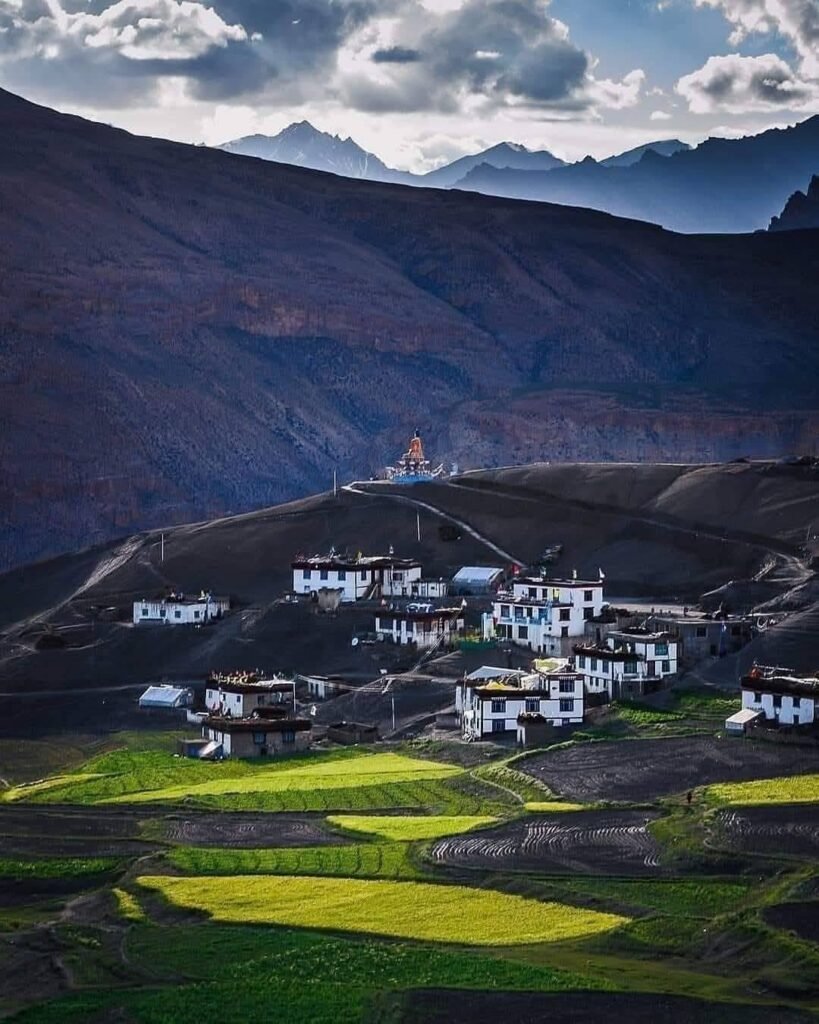
Spiti Valley is one of the most beautiful and adventurous destinations in Himachal Pradesh, India. Surrounded by high Himalayan mountains, ancient monasteries, small traditional villages, and breathtaking landscapes, Spiti Valley is a dream destination for nature lovers and adventure travelers.
Located in the cold desert region of Himachal Pradesh, Spiti offers a completely different experience from popular hill stations like Shimla and Manali. The high-altitude valleys, winding mountain roads, clear blue skies, and peaceful Buddhist culture make this destination truly unforgettable.
In this complete Spiti Valley travel guide, you will learn about the best places to visit, the best time to travel, popular routes, things to do, travel tips, and how to plan your perfect Spiti Valley trip.
Where is Spiti Valley?
Spiti Valley is located in the northeastern part of Himachal Pradesh in the Indian Himalayas. The word Spiti is often described as meaning The Middle Land, referring to its location between India and Tibet.
The valley is known for its dramatic landscapes, high-altitude villages, Buddhist monasteries, and unique cold desert environment.
The main town of Spiti Valley is Kaza, which is an important base for travelers exploring the region.
Best Places to Visit in Spiti Valley
Spiti Valley has many beautiful destinations that offer completely different experiences. From ancient monasteries to some of the world’s highest villages, every place has something special to offer.
Kaza
Kaza is the main town and administrative center of Spiti Valley. Most travelers use Kaza as their base for exploring nearby villages and attractions.
The town has hotels, homestays, restaurants, cafes, and basic facilities for tourists.
Kaza is surrounded by beautiful mountains and offers excellent views of the Spiti Valley landscape.
Key Monastery
Key Monastery, also known as Ki Monastery, is one of the most famous attractions in Spiti Valley.
Located on a hilltop, the monastery offers spectacular views of the surrounding mountains and valley.
It is one of the most important Buddhist monasteries in the region and attracts travelers interested in history, culture, photography, and spirituality.
Kibber Village
Kibber is a beautiful high-altitude village near Kaza.
The village is surrounded by dramatic mountains and offers visitors an opportunity to experience traditional life in Spiti Valley.
Kibber is also popular among wildlife enthusiasts and travelers who enjoy peaceful mountain destinations.
Langza Village
Langza is one of the most photographed villages in Spiti Valley.
The village is famous for its beautiful mountain views and the large Buddha statue overlooking the valley.
Langza is also known for fossils that can sometimes be found in the surrounding region.
The peaceful environment and dramatic scenery make Langza a must-visit destination.
Hikkim Village
Hikkim is famous among travelers for its high-altitude location and unique Himalayan environment.
The village is small, peaceful, and surrounded by spectacular mountain landscapes.
Visitors often include Hikkim in their sightseeing trip along with Langza and Komic.
Komic Village
Komic is another beautiful village located at a very high altitude.
The journey to Komic offers incredible views of the cold desert mountains and valleys.
The village is known for its peaceful atmosphere and traditional Himalayan lifestyle.
Tabo Monastery
Tabo is home to one of the most important and historic Buddhist monasteries in the Himalayan region.
Tabo Monastery is known for its ancient architecture, murals, and Buddhist heritage.
Travelers interested in culture and history should definitely include Tabo in their Spiti Valley itinerary.
Dhankar Monastery
Dhankar is famous for its dramatic location on a mountain.
The monastery offers breathtaking views of the surrounding valley and mountains.
Dhankar is an excellent destination for travelers interested in photography and Buddhist culture.
Best Time to Visit Spiti Valley
The best time to visit Spiti Valley depends on the type of experience you want.
Summer Season
The summer months are popular among tourists because the weather is generally more comfortable for sightseeing and road trips.
This is a good time to explore villages, monasteries, and mountain landscapes.
Monsoon Season
The weather and road conditions can vary during the monsoon period.
Travelers should always check current road conditions and weather forecasts before starting their journey.
Mountain roads can be affected by rainfall and landslides in some areas.
Winter Season
Winter transforms Spiti Valley into a beautiful snow-covered landscape.
However, temperatures can become extremely cold, and travel conditions may be difficult.
Winter travel is best suited for experienced travelers who are prepared for high-altitude and cold-weather conditions.
How to Reach Spiti Valley
There are two major routes commonly used to reach Spiti Valley.
Route 1: Via Shimla
The Shimla route generally passes through:
Shimla → Narkanda → Rampur → Reckong Peo → Nako → Tabo → Kaza
This route is often used for entering Spiti Valley gradually because the altitude increases slowly.
The journey also allows travelers to explore beautiful destinations in Kinnaur Valley.
Route 2: Via Manali
Another popular route connects Spiti Valley with Manali.
The journey passes through spectacular Himalayan landscapes and high mountain areas.
Road accessibility on this route depends heavily on weather and seasonal conditions.
Travelers should always check the latest road status before planning this route.
How Many Days Are Needed for a Spiti Valley Trip?
A good Spiti Valley trip usually requires several days because of the long mountain roads and high altitude.
A comfortable itinerary can take around 7 to 10 days, depending on your starting location and the places you want to visit.
A longer trip allows travelers to explore the region slowly and enjoy destinations such as:
- Shimla
- Kalpa
- Nako
- Tabo
- Dhankar
- Kaza
- Key Monastery
- Kibber
- Langza
- Hikkim
- Komic
Things to Do in Spiti Valley
Spiti Valley is not just about sightseeing. The destination offers many unforgettable experiences.
Explore Ancient Monasteries
Spiti Valley has a strong Buddhist culture.
Visiting monasteries allows travelers to learn more about the history, traditions, architecture, and lifestyle of the Himalayan region.
Visit High-Altitude Villages
Villages like Langza, Hikkim, Komic, and Kibber offer a unique travel experience.
These villages provide beautiful landscapes and an opportunity to experience traditional mountain life.
Enjoy Mountain Photography
Spiti Valley is a paradise for photographers.
Every road offers spectacular views of:
- Mountains
- Valleys
- Rivers
- Monasteries
- Traditional villages
- Star-filled night skies
Experience Local Culture
One of the best parts of traveling through Spiti is meeting local people and learning about their culture.
Visitors can experience traditional food, local architecture, Buddhist traditions, and Himalayan hospitality.
Important Travel Tips for Spiti Valley
Spiti Valley is a high-altitude destination, so travelers should plan carefully.
1. Take Time to Adjust to the Altitude
Do not rush your journey. Give your body time to adjust to the high altitude.
2. Carry Warm Clothes
Even during warmer months, mornings and nights can be cold.
Carry jackets, warm layers, gloves, and suitable shoes.
3. Check Road Conditions
Mountain roads can change due to weather, snowfall, rainfall, or landslides.
Always check current road conditions before starting your journey.
4. Carry Cash
Digital payment facilities may not always be available in remote locations.
Keeping some cash is a good idea.
5. Respect Local Culture
Spiti Valley has a rich Buddhist culture and traditional communities.
Travel responsibly and respect local customs, monasteries, and the environment.
6. Avoid Littering
The Himalayan environment is fragile.
Always carry your waste and avoid using unnecessary plastic.
What Makes Spiti Valley Special?
Spiti Valley is different from many other tourist destinations in India.
It offers:
- Dramatic Himalayan landscapes
- Ancient monasteries
- High-altitude villages
- Peaceful surroundings
- Adventure road trips
- Unique Buddhist culture
- Incredible photography opportunities
For travelers who want to experience the raw beauty of the Himalayas, Spiti Valley is truly unforgettable.
Plan Your Spiti Valley Adventure
A trip to Spiti Valley is more than just a holiday. It is a journey through some of the most spectacular landscapes in the Indian Himalayas.
From the ancient monasteries of Tabo and Key to the beautiful villages of Langza, Hikkim, and Komic, every destination offers a unique experience.
Plan your itinerary carefully, travel responsibly, respect the local culture, and take your time to enjoy the incredible beauty of this Himalayan valley.
Spiti Valley is waiting for you with mountains, monasteries, peaceful villages, and memories that will last a lifetime.
Frequently Asked Questions About Spiti Valley
Is Spiti Valley worth visiting?
Yes, Spiti Valley is absolutely worth visiting for travelers who love mountains, adventure, photography, culture, and unique Himalayan landscapes.
How many days are enough for Spiti Valley?
A trip of approximately 7 to 10 days is ideal for exploring the major attractions comfortably.
Which is the main town in Spiti Valley?
Kaza is the main town and an important base for travelers exploring Spiti Valley.
What is the best time to visit Spiti Valley?
The best time depends on your travel preferences. Summer is generally popular for sightseeing and road trips, while winter offers snow-covered landscapes and a completely different experience.
What are the best places to visit in Spiti Valley?
Some of the best places include Kaza, Key Monastery, Kibber, Langza, Hikkim, Komic, Tabo, and Dhankar.
Is Spiti Valley good for photography?
Yes. Spiti Valley is one of the best destinations in India for mountain, landscape, village, monastery, and night photography.